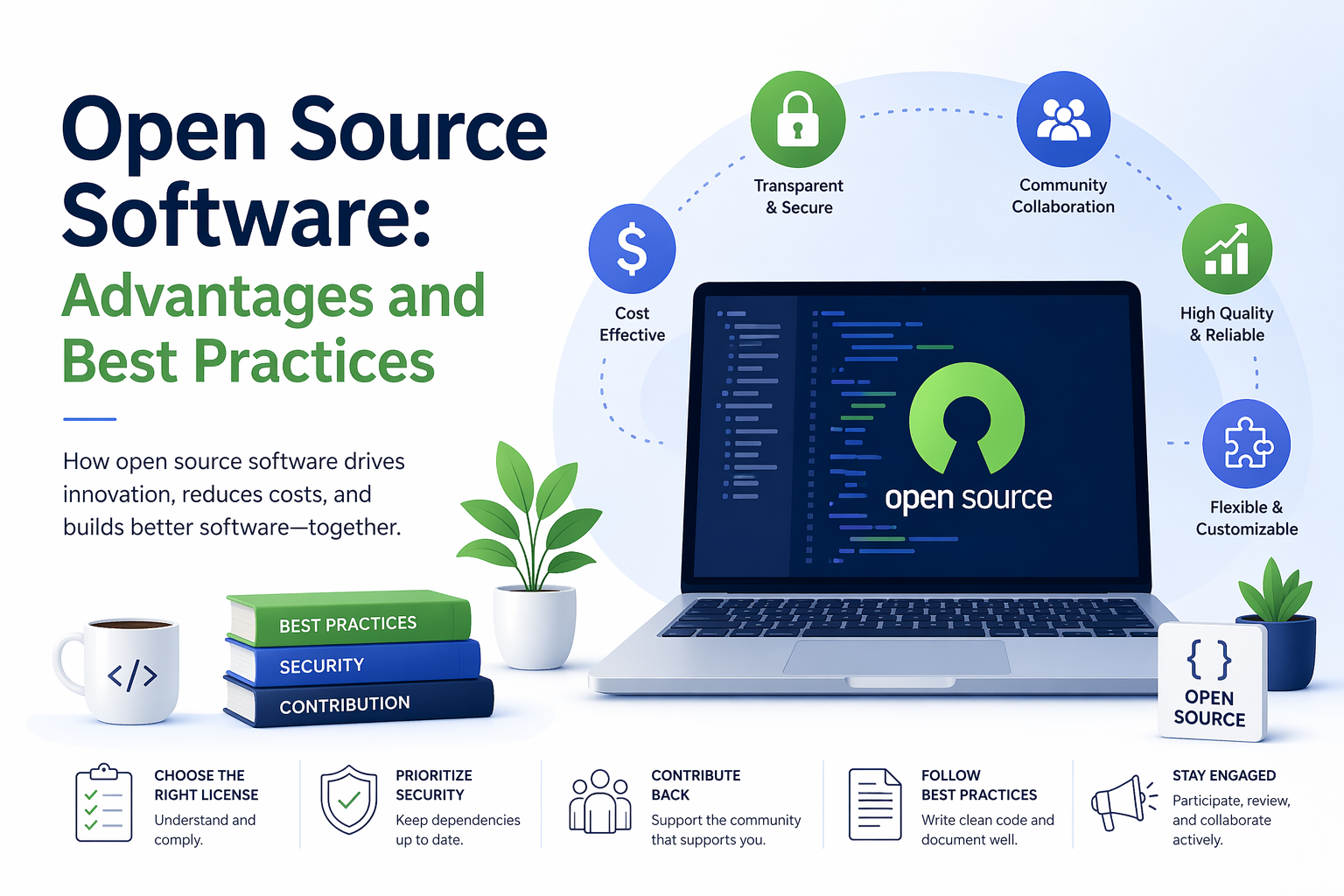
Many businesses and developers face a common challenge: how to build reliable software without being locked into expensive tools or restrictive ecosystems. Licensing costs rise, flexibility is limited, and innovation often slows down. This is where open source software becomes more than just an alternative—it becomes a strategic advantage.
But here’s the interesting part: open source is often misunderstood. Some see it as “free software,” while others question its security or long-term reliability. The reality is far more complex and far more powerful. Open source is not just about cost—it’s about control, collaboration, and continuous innovation.
This article takes a fresh perspective on open source software, exploring how it works, why it matters, and how individuals and organizations can use it effectively.
The Core Problem: Dependency on Closed Software Systems
Traditional proprietary software operates within a closed environment. Users pay for licenses, rely on vendors for updates, and have limited visibility into how the system works internally.
This creates several challenges:
- High licensing and subscription costs
- Limited customization options
- Vendor lock-in, making migration difficult
- Dependence on external timelines for updates and fixes
For businesses, this dependency can slow down innovation. If a feature is missing or a bug exists, users must wait for the vendor to address it. This lack of control can be frustrating, especially in fast-moving industries.
According to Red Hat, open source software provides greater flexibility by allowing users to inspect, modify, and enhance code freely.
The core issue is not just cost—it is control over technology.
Open source software addresses this by shifting power from vendors to users and communities.
What Open Source Software Really Means
Open source software is defined by its accessibility. The source code is publicly available, allowing anyone to view, modify, and distribute it.
However, open source is more than just access—it is a philosophy of collaboration and transparency.
Key characteristics include:
- Freedom to use the software for any purpose
- Access to source code for inspection and modification
- Ability to distribute original or modified versions
- Community-driven development and improvement
Popular examples include Linux, WordPress, and Apache.
These projects demonstrate how open collaboration can produce high-quality, widely adopted software.
Here is a simple comparison between open source and proprietary software:
| Aspect | Open Source | Proprietary |
|---|---|---|
| Access to Code | Available | Restricted |
| Customization | High | Limited |
| Cost | Often free | Paid licenses |
| Control | User/community | Vendor |
According to Open Source Initiative, open source encourages innovation by enabling collaboration across global communities.
The key idea is simple: shared knowledge leads to better software.
Why Open Source Software Drives Innovation
One of the most powerful aspects of open source is its ability to accelerate innovation.
Unlike closed systems, where development is limited to a single organization, open source projects benefit from contributions around the world. Developers, researchers, and companies collaborate to improve the software continuously.
Faster Problem Solving
When issues arise, they can be identified and fixed by anyone in the community. This often leads to faster resolution compared to waiting for a vendor.
Diverse Perspectives
Global contributors bring different experiences and ideas, leading to more creative solutions.
Rapid Iteration
Open source projects evolve quickly because updates and improvements are not restricted by internal approval processes.
According to McKinsey & Company, organizations that leverage open source can accelerate digital transformation and reduce development time.
From practical experience, many modern technologies—such as cloud platforms and AI frameworks—are built on open source foundations. This shows how deeply embedded open source has become in the software ecosystem.
The result is a cycle of continuous improvement, where innovation builds on shared knowledge.
Challenges and Misconceptions About Open Source
Despite its advantages, open source software is not without challenges.
Security Concerns
Some believe open source is less secure because the code is publicly available. In reality, transparency often improves security, as vulnerabilities can be identified and fixed بسرعة. However, it still requires proper management and updates.
Lack of Official Support
Unlike proprietary software, open source projects may not offer dedicated support. Organizations may need internal expertise or third-party services.
Maintenance Responsibility
Users are responsible for maintaining and updating the software. This requires time and technical knowledge.
Compatibility Issues
Integrating open source tools with existing systems can sometimes be challenging.
These challenges highlight an important point: open source is not automatically easier—it requires active participation and management.
The key is to approach it strategically, understanding both its strengths and limitations.
How to Use Open Source Software Effectively
To maximize the benefits of open source, organizations and developers need a clear approach.
1. Choose the Right Projects
Evaluate community activity, documentation, and long-term viability before adopting a tool.
2. Contribute Back
Engaging with the community helps improve the software and builds credibility.
3. Ensure Proper Security Practices
Regular updates, vulnerability scanning, and monitoring are essential.
4. Combine with Internal Expertise
Having skilled developers ensures better customization and maintenance.
5. Use Hybrid Approaches
Many organizations combine open source with proprietary tools to balance flexibility and support.
According to Linux Foundation, organizations that actively manage open source adoption see higher efficiency and innovation.
The goal is not to replace everything with open source, but to use it where it creates the most value.
Conclusion: Open Source as a Foundation for Modern Software
Open source software represents a shift in how technology is created and shared. This article explored the challenges of relying on closed systems, the true meaning of open source, its role in driving innovation, and the practical steps for using it effectively.
The central idea is clear: open source is about control, collaboration, and continuous improvement.
It allows individuals and organizations to break free from limitations, adapt technology to their needs, and participate in a global ecosystem of innovation.
However, it is not a shortcut. It requires responsibility, strategy, and active engagement. Success with open source comes from understanding when and how to use it—not just adopting it blindly.
If you are a developer, business owner, or decision-maker, now is the time to explore how open source can support your goals. Start small. Experiment with tools. Learn from communities. Build confidence step by step.
The future of software is not owned by a single company—it is built collaboratively.
Take action today. Evaluate your current tools, identify opportunities for open source adoption, and begin your journey toward greater flexibility and innovation.
Because the most powerful ideas are not the ones kept closed—but the ones shared and improved together.