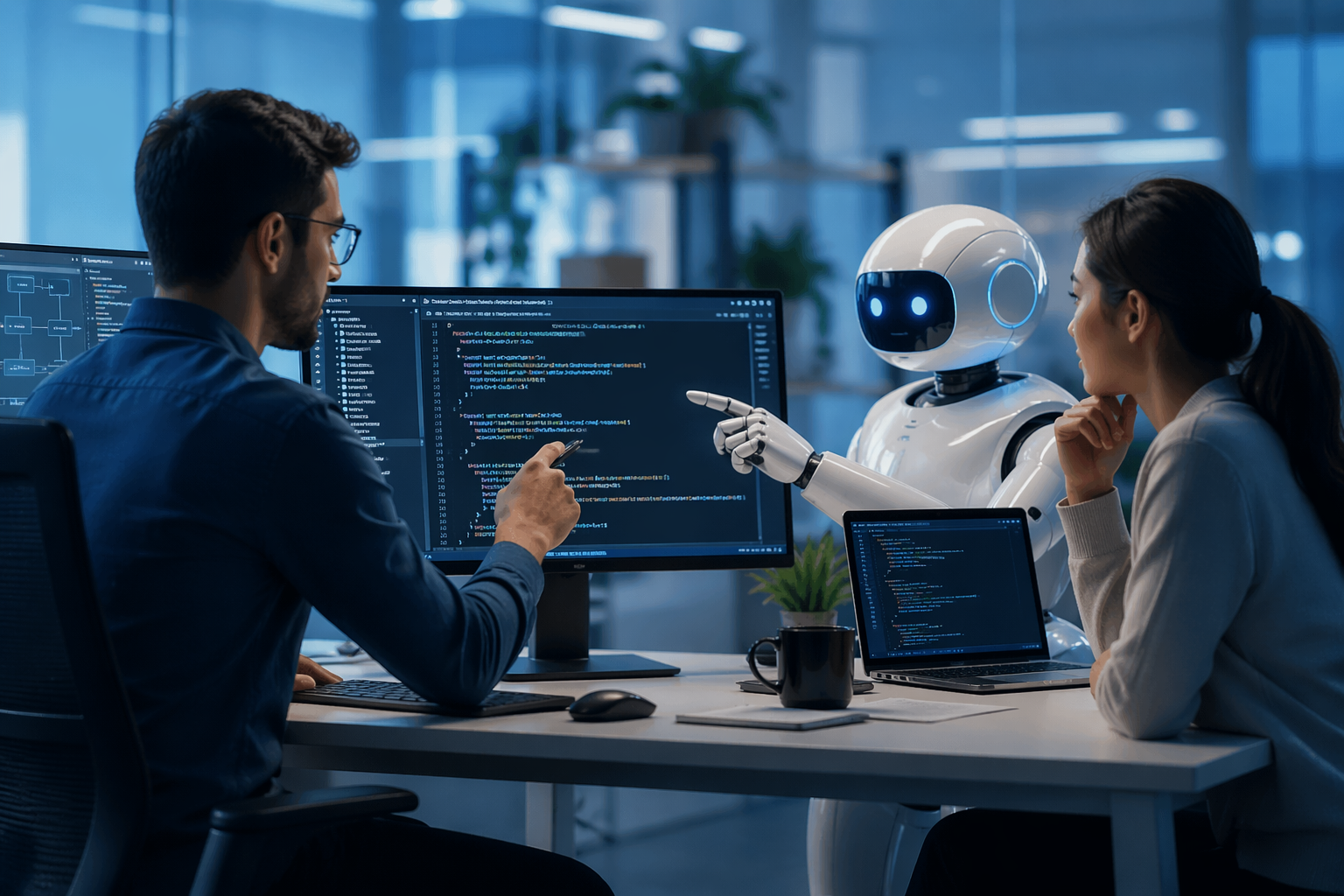
Software development is becoming more complex every year. Teams are expected to deliver faster, write cleaner code, and maintain systems that scale without failure. Yet, despite better tools and frameworks, many developers still struggle with repetitive tasks, debugging issues, and tight deadlines. This is where artificial intelligence in software engineering starts to reshape the landscape—but not always in the way people expect.
Some see AI as a replacement for developers. Others view it as just another automation tool. The reality sits somewhere in between. The real question is not whether AI will change software engineering—it already has—but how developers and organizations can use it effectively without losing control of quality and creativity.
Why Traditional Development Approaches Are No Longer Enough
For decades, software engineering has followed structured processes: planning, coding, testing, and deployment. While these methods remain important, they are increasingly challenged by the speed and scale of modern applications. Projects now involve complex architectures, distributed systems, and constant updates. As a result, traditional approaches often struggle to keep up.
One major issue is time pressure. Developers are expected to deliver features quickly while maintaining high quality. This often leads to shortcuts, technical debt, and overlooked bugs. Even experienced engineers can miss subtle issues when working under tight deadlines.
Another challenge is the growing حجم of code. Large applications can contain millions of lines of code, making it difficult to track dependencies and understand system behavior. Debugging becomes more time-consuming, and identifying the root cause of problems can feel like searching for a needle in a haystack.
Manual testing is also becoming less efficient. As systems grow, testing every possible scenario manually is nearly impossible. Automated testing helps, but it still requires significant setup and maintenance.
From my observation of development teams, many spend a large portion of their time on repetitive tasks—writing boilerplate code, fixing minor bugs, or reviewing similar pull requests. These tasks are necessary but do not add significant value.
This is where artificial intelligence offers a new approach. Instead of replacing traditional methods, it enhances them by reducing repetitive work and improving decision-making.
How AI Is Changing the Way Code Is Written
One of the most visible impacts of artificial intelligence in software engineering is in the coding process itself. AI-powered tools can now assist developers by suggesting code, completing functions, and even generating entire modules based on simple instructions.
These tools analyze large datasets of existing code to identify patterns and best practices. When a developer starts writing, the AI can predict what comes next and offer suggestions. This not only speeds up development but also helps maintain consistency across the codebase.
For example, a developer working on a web application might begin writing a function for user authentication. An AI tool can suggest secure implementation patterns, reducing the risk of common vulnerabilities. This is particularly useful for less experienced developers who may not be familiar with all security considerations.
Another advantage is reducing boilerplate code. Many applications require repetitive structures, such as data models or API endpoints. AI can generate these quickly, allowing developers to focus on more complex logic.
However, it is important to understand the limitations. AI-generated code is not always perfect. It may produce inefficient or incorrect solutions if not reviewed carefully. Developers must still validate and refine the output.
In practice, teams that use AI as a support tool—rather than a replacement—tend to see the best results. Productivity increases, but human oversight ensures quality remains high.
Improving Testing and Debugging With Intelligent Systems
Testing and debugging are critical parts of software engineering, yet they are often time-consuming and repetitive. Artificial intelligence introduces new ways to make these processes more efficient and effective.
AI can analyze code to identify potential bugs before the application is even executed. This is done through techniques such as static analysis combined with machine learning models that recognize patterns associated with errors. As a result, developers can address issues earlier in the development cycle.
In testing, AI can generate test cases automatically based on the structure and behavior of the application. Instead of manually writing tests for every scenario, developers can rely on AI to cover a wide range of possibilities. This increases test coverage and reduces the likelihood of missing critical cases.
Another powerful application is in debugging. When a system fails, AI can analyze logs, trace execution paths, and suggest possible causes. This significantly reduces the time required to identify and fix issues.
For instance, in a large-scale application with multiple services, a failure in one component can trigger a chain reaction. Manually tracing this can take hours. AI tools can quickly narrow down the source of the problem by analyzing patterns in the data.
From practical experience, teams that integrate AI into their testing workflows often report faster release cycles and fewer production issues. The key benefit is not just speed, but improved accuracy in identifying problems.
Enhancing Project Management and Decision-Making
Beyond coding and testing, artificial intelligence in software engineering also plays a significant role in project management. Managing timelines, resources, and risks is becoming increasingly complex, especially for large projects.
AI can analyze historical project data to predict timelines and identify potential delays. For example, if similar projects in the past experienced delays during testing, the system can flag this as a risk in current projects. This allows managers to take preventive action.
Resource allocation is another area where AI provides value. By analyzing workload patterns, AI can suggest how to distribute tasks more efficiently among team members. This helps prevent burnout and ensures that critical tasks receive adequate attention.
AI can also assist in prioritizing features. By analyzing user data and feedback, it can identify which features are most valuable to users. This helps teams focus on what matters most, rather than relying solely on assumptions.
In real-world scenarios, organizations that use AI for project insights often make more informed decisions. They can adapt quickly to changes and reduce the risk of project failure.
However, it is important to combine AI insights with human judgment. Data can provide valuable guidance, but it cannot fully capture the nuances of every situation.
Challenges and Risks of Using AI in Software Engineering
While the benefits of artificial intelligence in software engineering are significant, there are also challenges that must be addressed. Ignoring these risks can lead to new problems rather than solving existing ones.
One major concern is over-reliance on AI. If developers depend too heavily on automated tools, they may lose critical thinking skills. This can result in a lack of understanding of the code, making it harder to troubleshoot issues when they arise.
Data quality is another important factor. AI systems rely on training data to generate outputs. If the data is outdated or biased, the results may be inaccurate or suboptimal. This is particularly concerning in areas such as security, where incorrect implementations can have serious consequences.
There are also ethical considerations. AI-generated code may inadvertently include copyrighted material or insecure patterns. Organizations must ensure that their use of AI complies with legal and ethical standards.
Security is another challenge. While AI can help improve security, it can also introduce vulnerabilities if not used carefully. For example, automatically generated code may include hidden flaws that are not immediately obvious.
In practice, the best approach is to treat AI as a tool, not a decision-maker. Developers should review outputs, validate results, and maintain control over the development process.
Practical Steps to Integrate AI Into Your Development Workflow
Adopting artificial intelligence in software engineering does not require a complete transformation overnight. Instead, a gradual and strategic approach is often more effective.
The first step is identifying areas where AI can provide the most value. This might include code generation, testing, or project management. Starting with a specific use case allows teams to evaluate the benefits without overwhelming the workflow.
Next, choose tools that integrate well with existing systems. Compatibility is important to ensure a smooth transition. Many modern development environments already support AI-powered features, making adoption easier.
Training is also essential. Developers need to understand how to use AI tools effectively and how to interpret their outputs. This includes recognizing when suggestions are useful and when they should be ignored.
Another important step is establishing guidelines. Teams should define how AI tools are used, what level of review is required, and how to handle potential issues. This ensures consistency and reduces risks.
Finally, monitor performance and continuously improve. Collect feedback from developers, track productivity changes, and adjust the approach as needed.
From practical experience, organizations that adopt AI gradually and thoughtfully tend to achieve better results. They gain the benefits of automation while maintaining control and quality.
Conclusion: A New Role for Developers in the Age of AI
Artificial intelligence in software engineering is not about replacing developers—it is about redefining their role. By automating repetitive tasks and providing intelligent insights, AI allows developers to focus on higher-level problem-solving and innovation.
The challenge is not whether to use AI, but how to use it responsibly. Organizations that strike the right balance between automation and human expertise will be better positioned to build efficient, secure, and scalable software.
As technology continues to evolve, one thing remains clear: the future of software engineering will not be driven by humans or AI alone, but by a combination of both working together effectively.