Most software projects don’t fail because of bad ideas—they fail because of poor execution. Deadlines slip, features don’t match expectations, and teams struggle to stay aligned. This is where the software development lifecycle becomes essential. But here’s the interesting part: many teams follow the steps without truly understanding why they exist.
The software development lifecycle (SDLC) is often presented as a structured process with clear phases. In reality, it’s more like a framework for thinking—a way to organize work, reduce risk, and build better software consistently. If you’ve ever wondered why some projects run smoothly while others become chaotic, the answer usually lies in how well the lifecycle is applied.
This article takes a practical and modern look at SDLC—focusing on how it works in real-world scenarios, where teams go wrong, and how to use it effectively.
The Core Problem: Why Software Projects Lose Direction
Software development is not just about writing code. It involves planning, communication, testing, deployment, and continuous improvement. Without a structured approach, projects quickly become disorganized.
One of the most common issues is unclear requirements. Teams start building without fully understanding what needs to be delivered. As development progresses, new ideas are added, priorities shift, and the original plan becomes irrelevant.
Another major problem is lack of coordination. Developers, designers, testers, and stakeholders often work in silos. This leads to miscommunication, duplicated effort, and inconsistent results.
Time pressure also plays a role. Teams rush to meet deadlines, skipping important steps like proper testing or documentation. This creates technical debt—issues that must be fixed later at a higher cost.
From practical experience, one of the biggest risks is assuming that development is a linear process. In reality, it is dynamic and iterative. Without a framework like SDLC, teams struggle to adapt to changes.
The purpose of the software development lifecycle is to bring structure to this complexity. It provides a clear path from idea to delivery while allowing flexibility for adjustments.
In simple terms: SDLC helps teams stay organized, focused, and aligned.
Understanding the Key Phases of the Software Development Lifecycle
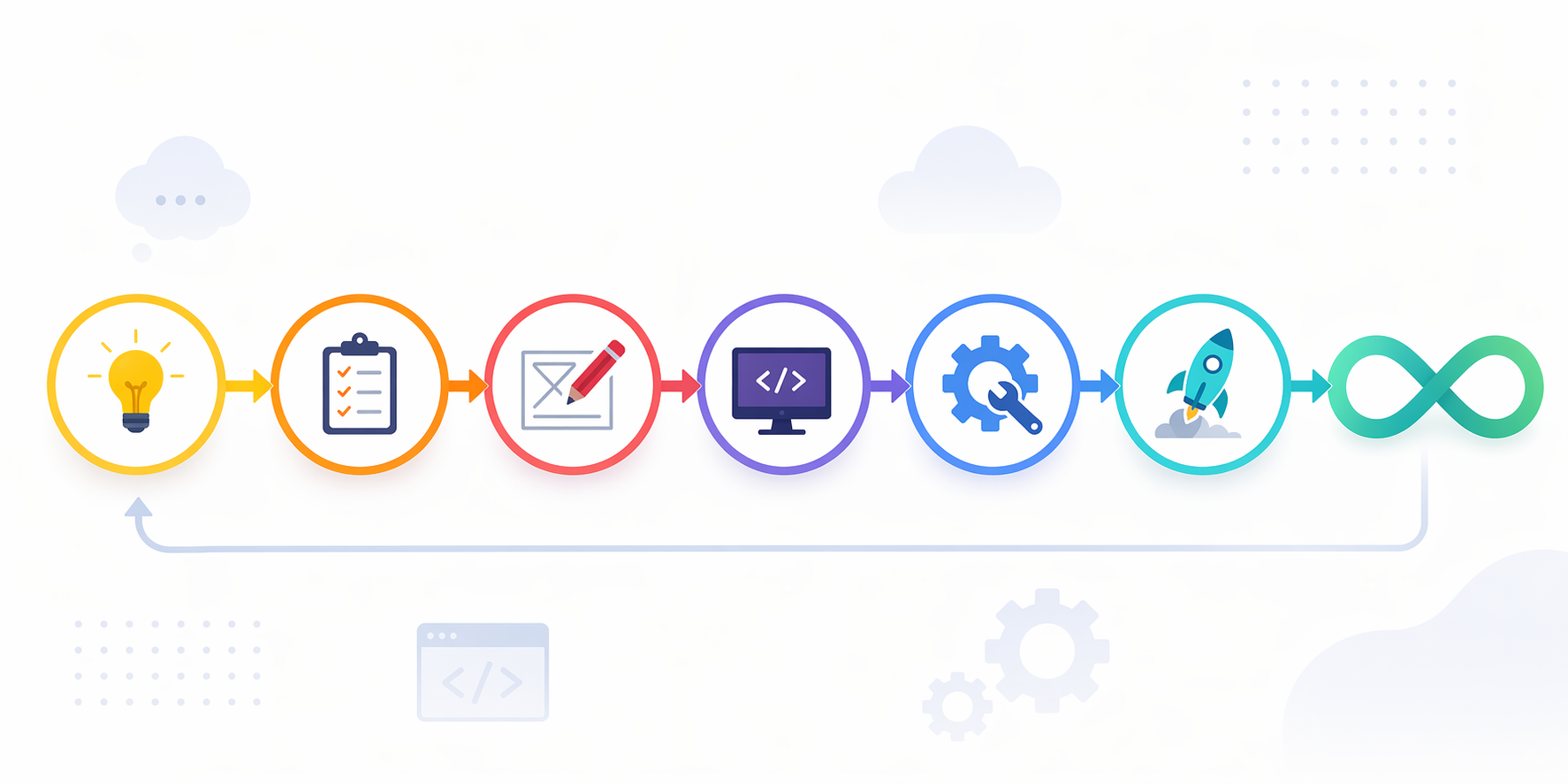
The software development lifecycle is typically divided into several phases. Each phase has a specific purpose and contributes to the overall success of the project.
1. Planning
This is where everything begins. Teams define goals, identify requirements, and assess feasibility. A clear plan reduces uncertainty and sets expectations.
2. Analysis
In this phase, requirements are examined in detail. Teams identify potential challenges and refine the scope of the project.
3. Design
Design focuses on how the system will work. This includes architecture, user interfaces, and data structures.
4. Development
This is where coding happens. Developers build the system based on the design specifications.
5. Testing
Testing ensures that the software works as expected. It identifies bugs and verifies functionality.
6. Deployment
The software is released to users. This can be done in stages or as a full launch.
7. Maintenance
After release, the system is monitored and updated. This includes fixing bugs, improving performance, and adding new features.
Although these phases appear sequential, they often overlap. Modern development approaches revisit these steps multiple times.
The key is not to follow them rigidly, but to understand their purpose and adapt them to your workflow.
How Different SDLC Models Affect Development Outcomes
Not all teams use the same approach to the software development lifecycle. Different models exist, each with its own strengths and limitations.
Waterfall Model
This is a linear approach where each phase is completed before moving to the next. It works well for projects with clear and stable requirements.
Agile Model
Agile breaks the lifecycle into smaller iterations. Teams deliver incremental updates and adapt based on feedback.
Spiral Model
This combines iterative development with risk assessment. It is useful for complex and high-risk projects.
DevOps Approach
DevOps integrates development and operations, emphasizing automation and continuous delivery.
Here is a simple comparison:
| Model | Flexibility | Best Use Case |
|---|---|---|
| Waterfall | Low | Stable requirements |
| Agile | High | Dynamic projects |
| Spiral | Moderate | High-risk systems |
| DevOps | High | Continuous delivery |
Choosing the right model depends on project complexity, team structure, and business goals.
The most effective teams often combine elements from different models rather than relying on a single approach.
Practical Ways to Improve Your Software Development Lifecycle
Understanding SDLC is one thing—applying it effectively is another. Many teams struggle not because they lack knowledge, but because they fail to implement it properly.
1. Define Clear Requirements Early
Spend time understanding what needs to be built. This reduces confusion later in the process.
2. Encourage Team Collaboration
Break down silos between departments. Regular communication improves alignment and efficiency.
3. Start Testing Early
Testing should not be a final step. Integrate it throughout the development process to catch issues early.
4. Use Iterative Development
Break the project into smaller parts. Deliver value incrementally and adapt based on feedback.
5. Monitor and Improve Continuously
After deployment, collect data and user feedback. Use this information to refine the product.
From real-world experience, one of the most effective improvements is shortening feedback loops. The faster you learn, the faster you can improve.
SDLC should not slow you down—it should help you move smarter.
Common Mistakes Teams Make with SDLC
Even with a structured lifecycle, teams can still encounter problems.
- Overcomplicating the process: Too many steps can reduce efficiency
- Ignoring user feedback: Leads to misaligned products
- Skipping documentation: Creates confusion later
- Rushing testing: Results in unstable releases
- Resisting change: Limits adaptability
The key is balance. Structure should guide the process, not restrict it.
Teams must remain flexible while maintaining discipline.
Conclusion: Turning Process into Progress
The software development lifecycle is not just a set of steps—it is a way to bring clarity and structure to complex projects. This article explored why software projects often lose direction, how SDLC phases work, different lifecycle models, and practical ways to improve implementation.
The main idea is simple: successful software development requires both structure and adaptability.
SDLC provides the structure, while modern practices like iterative development and continuous feedback provide adaptability.
If you are part of a development team, now is the time to evaluate your current process. Are you following a clear lifecycle? Are you adapting to changes effectively? Are you learning from each iteration?
Start with small improvements. Clarify requirements. Improve communication. Integrate testing earlier. Focus on delivering value continuously.
Over time, these changes will transform how your team works.
The goal is not to follow a perfect process—it is to create a process that works for you.
Because in the end, great software is not just built—it is carefully developed through the right steps, at the right time, with the right mindset.