The Real Problem: Why Traditional Software Is Slowing You Down
Imagine this: your business depends on software that requires constant updates, expensive licenses, and a dedicated IT team just to keep it running. Every time something breaks, productivity halts. Every upgrade costs time and money. Sound familiar?
This is the hidden cost of traditional software ownership—complexity, rigidity, and inefficiency. Businesses today need tools that move as fast as they do. Yet, many are still stuck with outdated systems that were never designed for the speed of modern operations.
This is exactly where Software as a Service (SaaS) changes the game.
What SaaS Really Means (Beyond the Buzzword)
Software as a Service is not just a technical model—it’s a shift in how we think about software itself. Instead of owning software, you access it. Instead of installing it, you log in. Instead of maintaining it, someone else handles everything behind the scenes.
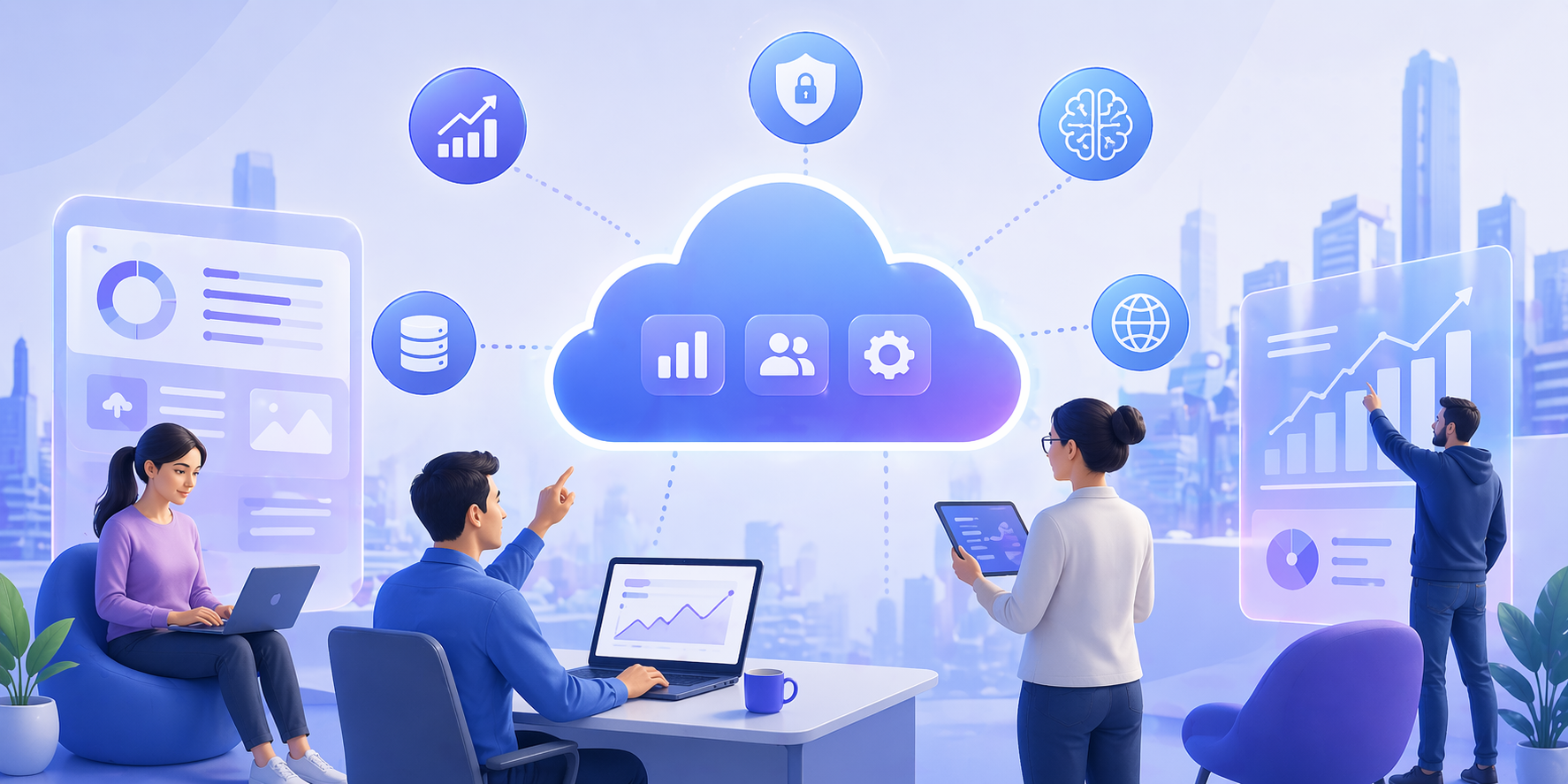
At its core, SaaS delivers applications over the internet, allowing users to access tools through a browser without worrying about infrastructure or updates :contentReference[oaicite:0]{index=0}.
But here’s the deeper insight: SaaS is not about software—it’s about removing friction.
1. Eliminate Technical Barriers Instantly
From Installation to Instant Access
Traditional software requires installation, configuration, and compatibility checks. SaaS removes all of that. You simply open a browser and start working.
This means:
- No more waiting for IT teams
- No hardware limitations
- No version conflicts
Because SaaS applications are hosted remotely and maintained by providers, users can access full functionality without managing infrastructure :contentReference[oaicite:1]{index=1}.
Real-World Example
Think about tools like Google Docs. Teams can collaborate in real time without installing anything. The result? Faster workflows and zero setup delays.
2. Turn Costs Into Predictable Investments
From Big Upfront Payments to Flexible Subscriptions
Buying traditional software often means large upfront costs. SaaS flips this into a subscription model—monthly or yearly payments based on usage.
This shift matters because:
- You only pay for what you use
- Budgeting becomes easier
- Scaling doesn’t require massive reinvestment
SaaS commonly operates on subscription or usage-based pricing, replacing one-time licensing with ongoing access :contentReference[oaicite:2]{index=2}.
Practical Tip
Start with a small plan. As your business grows, upgrade gradually. This avoids overpaying for features you don’t need yet.
3. Scale Without Breaking Your System
Growth Without Infrastructure Headaches
Scaling a traditional system often means buying new servers, upgrading hardware, and hiring more IT staff. SaaS removes these barriers entirely.
Because it runs on cloud infrastructure, SaaS can handle growth automatically—whether you have 10 users or 10,000.
Cloud-based SaaS platforms are designed to scale efficiently, often sharing resources across users while maintaining performance :contentReference[oaicite:3]{index=3}.
Real Example
A startup can begin with a basic CRM system and scale to enterprise-level usage without ever migrating systems. The platform evolves with the business.
4. Always Stay Updated—Without Lifting a Finger
The End of Manual Updates
One of the biggest hidden costs of traditional software is maintenance. Updates take time, require testing, and often disrupt workflows.
With SaaS:
- Updates happen automatically
- Security patches are applied instantly
- New features appear without downtime
Providers handle maintenance, performance, and upgrades as part of the service itself :contentReference[oaicite:4]{index=4}.
Why This Matters
Your team always works with the latest version—no delays, no risks, no interruptions.
5. Work From Anywhere, Anytime
Freedom Beyond the Office
Modern work is no longer tied to a single location. SaaS enables teams to access tools from any device with an internet connection.
This flexibility:
- Supports remote work
- Improves collaboration
- Increases productivity
Since SaaS applications are accessed online, users can work from virtually anywhere without installing software locally :contentReference[oaicite:5]{index=5}.
Example in Action
A distributed team across multiple countries can collaborate on the same project in real time—without worrying about file versions or compatibility.
6. Focus on What Actually Matters: Your Business
Stop Managing Software, Start Driving Growth
When you remove the burden of infrastructure, maintenance, and troubleshooting, your team can focus on what truly matters—growth, innovation, and customer experience.
SaaS shifts responsibility from the user to the provider, allowing businesses to concentrate on core activities instead of technical operations :contentReference[oaicite:6]{index=6}.
Actionable Insight
Audit your current tools. Identify which ones consume the most time or resources. Replace them with SaaS alternatives where possible.
7. Understand the Trade-Offs Before You Commit
Not Everything Is Perfect
While SaaS offers many advantages, it’s not without challenges. Being aware of these helps you make smarter decisions.
- Data security concerns
- Dependence on internet connectivity
- Vendor lock-in risks
Despite its benefits, SaaS can introduce concerns such as security risks and reduced control over systems :contentReference[oaicite:7]{index=7}.
How to Mitigate Risks
- Choose reputable providers
- Review security certifications
- Ensure data backup options exist
8. The Future: Why SaaS Is Becoming the Default
A Shift You Can’t Ignore
SaaS is no longer a trend—it’s becoming the standard way software is delivered and consumed. By 2023, it had already become the dominant model in software deployment :contentReference[oaicite:8]{index=8}.
Why?
- Businesses demand flexibility
- Remote work is the norm
- Speed is a competitive advantage
What This Means for You
Adopting SaaS is not just about technology—it’s about staying competitive in a fast-moving world.
Conclusion: Stop Owning Software, Start Using It Smarter
The biggest shift SaaS introduces is simple but powerful: you don’t need to own software to benefit from it.
By removing technical barriers, reducing costs, enabling scalability, and supporting modern work styles, SaaS transforms software from a burden into a strategic advantage.
If your current systems feel slow, expensive, or difficult to manage, the problem may not be your team—it may be the model you’re using.
And SaaS offers a way out.